
Obstetrical Conditions Affecting Labor and Birth
Key Points
- Labor risk can increase abruptly from amniotic, fetal, or maternal obstetrical complications.
- Key complications include meconium-stained fluid, oligohydramnios/polyhydramnios, malpresentation, and preeclampsia/diabetes-related effects.
- Continuous reassessment and condition-specific escalation reduce maternal and neonatal morbidity.
- Intrapartum preparation should include neonatal-resuscitation readiness for meconium exposure and dual-team resource planning for high-risk multifetal or operative pathways.
Pathophysiology
Obstetrical conditions affecting labor alter fetal oxygen transfer, uterine mechanics, or maternal physiologic reserve. Complications may arise from amniotic fluid abnormalities, fetal position/anomaly factors, or disease states that worsen placental performance and labor tolerance.
These conditions can produce rapid shifts from stable labor to emergency states. Nursing care must integrate early cue detection, targeted surveillance, and immediate intervention pathways tailored to the underlying mechanism.
Classification
- Amniotic-fluid conditions: Meconium-stained fluid, oligohydramnios, polyhydramnios, and intraamniotic infection contexts.
- Fetal conditions: Malpresentation, multiple gestation, fetal anomaly, and fetal demise contexts.
- Maternal obstetrical conditions: Preterm labor (20 to 36 6/7 weeks), PPROM, postterm pregnancy, precipitous labor, preeclampsia, and diabetes-related intrapartum risk.
Amniotic-fluid high-yield cues:
- Meconium-stained fluid: Green/brown fluid from fetal meconium passage (gastrointestinal maturity, hypoxia response, or vagal cord-compression response); postterm pregnancy and fetal distress are major risk contexts. Prepare NICU/resuscitation team at birth, and avoid routine suctioning when the newborn is vigorous.
- Oligohydramnios: Typical ultrasound criteria are AFI less than 5 cm, maximum pocket less than 2 cm, or volume less than 500 mL; associated with ruptured membranes, placental insufficiency, fetal anomalies, and medication effects (for example indomethacin). Severe cases may require induction; intrapartum variable/prolonged decelerations from cord compression are common.
- Polyhydramnios: Severity context is often mild AFI 25 to 29 cm, moderate 30 to 34 cm, and severe 35 cm or greater. Causes include fetal structural/genetic issues and maternal diabetes. Risks include preterm labor, PROM, cord prolapse, fetal malpresentation, uterine atony, postpartum hemorrhage, and abruption after membrane rupture/decompression.
- Chorioamnionitis: Intraamniotic infection with risk factors including prolonged labor or ROM, frequent exams, internal monitoring, meconium-stained fluid, and vaginal bacterial colonization. Clinical diagnosis is prioritized over culture timing; broad-spectrum antibiotics are started promptly.
- Amnioinfusion context: May reduce operative birth risk and cord-compression decelerations and dilute meconium, but contraindications include fetal distress, active genital herpes, placenta previa, placental abruption, and fetal malpresentation.
- Amnioinfusion complications: Monitor for overdistention and complications such as chorioamnionitis, cord prolapse, prolonged labor, or uterine perforation.
- Postterm pregnancy (beyond 42 weeks): Increases fetal morbidity and mortality risk with higher concern for placental insufficiency, oligohydramnios, and nonreassuring fetal testing.
- Postterm adverse-outcome spectrum: Maternal risks include labor dystocia, operative/perineal trauma, and postpartum hemorrhage; fetal/newborn risks include stillbirth, meconium aspiration, hypoxic-ischemic injury, neonatal seizures, and NICU admission.
Placental-condition high-yield cues:
- Placenta previa: Lower-segment placental implantation with bleeding risk; bright red vaginal bleeding may occur with or without pain, and complete coverage of the internal os usually necessitates cesarean birth.
- Placental abruption: Partial or complete placental separation, often with sudden severe abdominal pain and dark red bleeding (or concealed bleeding), uterine hypertonicity/prolonged contraction, and rapid maternal-fetal instability.
Fetal-condition high-yield cues:
- Multiple gestation: Twin gestation frequency is about 32.6 per 1,000 births; uncomplicated twins are often delivered by about 38 weeks. Intrapartum risk includes dystocia, abnormal presentation, cord prolapse, abruption, emergent operative birth, and postpartum hemorrhage.
- Intrauterine fetal demise (IUFD): About 1 in 160 births; risk factors include prior stillbirth, obesity, hypertension, diabetes, smoking, multiple gestation, growth restriction, and oligohydramnios. Intrapartum support includes cause-evaluation counseling options and structured perinatal-bereavement support.
- Malpresentation: Occiput posterior is common (about 15 to 30 percent of cephalic presentations) and may respond to hands-and-knees/forward-leaning/side-lying positioning. Breech is about 3 to 4 percent at term; face mentum-anterior may deliver vaginally, whereas mentum-posterior usually requires cesarean.
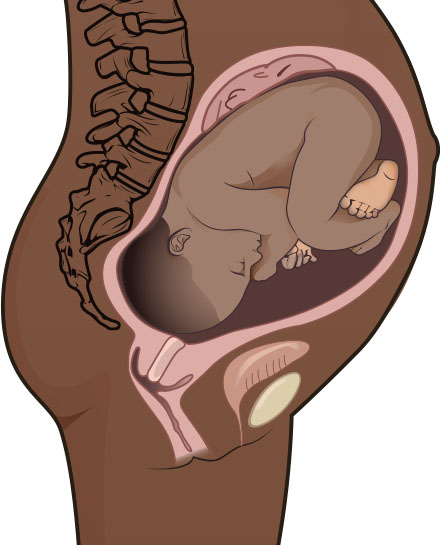 Illustration reference: OpenStax Maternal-Newborn Nursing Ch.19.3.
- Fetal-distress emergency causes: Immediate-delivery triggers include uterine rupture, severe placental abruption, cord prolapse, amniotic-fluid embolus, and vasa previa with fetal exsanguination.
Nursing Assessment
NCLEX Focus
Priority questions target the first assessment/intervention when high-risk obstetrical conditions show fetal or maternal deterioration.
- Monitor fetal tracing for late/variable decelerations and tolerance changes linked to specific risk conditions.
- In postterm pregnancies, monitor fetal surveillance findings (NST/BPP) closely; nonreactive NST can indicate hypoxemia and urgent reassessment need.
- Assess maternal vital signs, symptoms, and fluid status for evolving hypertensive, infectious, or metabolic instability.
- Track labor progress patterns and identify condition-driven arrest, distress, or hemorrhage risk.
- Anticipate neonatal transition risk and ensure team/equipment readiness for high-risk deliveries.
- For suspected intraamniotic infection, assess for maternal/fetal tachycardia, uterine tenderness, foul-smelling fluid, and purulent cervical discharge.
- Escalate rapidly for possible maternal sepsis progression signs in infection contexts (hypotension, confusion, gastrointestinal symptoms, diaphoresis, or worsening perfusion).
- In placental-abruption scenarios, prepare for possible rapid deterioration requiring emergency cesarean, IV fluid resuscitation, blood products, and continuous hemodynamic/fetal monitoring.
Nursing Interventions
- Implement condition-specific surveillance (for example, continuous fetal monitoring in higher-risk contexts).
- For postterm pregnancies, coordinate timing/escalation decisions for induction versus cesarean based on combined maternal-fetal status.
- In meconium-suspected deliveries, prioritize team readiness and guideline-based neonatal respiratory support rather than routine nasopharyngeal suctioning.
- Escalate rapidly for signs of fetal compromise, severe maternal symptoms, or emergent obstetrical events.
- In severe polyhydramnios, prepare post-amnioreduction surveillance and monitor for acute bleeding/pain changes suggestive of abruption.
- Support glucose and blood pressure management pathways during labor when ordered.
- Coordinate multidisciplinary and neonatal resources proactively for anticipated complications.
- In multifetal labor, coordinate continuous monitoring for each fetus, immediate ultrasound availability for presentation checks, blood-product readiness, and operative-suite backup.
- In IUFD care, provide bereavement-informed support (family presence choices, memory-making options, and social-work/counselor linkage) while maintaining respectful clinical safety workflows.
- In precipitous labor emergencies, follow rapid nurse-delivery safety sequence (call help, assist controlled birth, prioritize warming/skin-to-skin, avoid traction on cord, and prepare oxytocin per protocol for hemorrhage prevention).
Rapid Decompensation Potential
Obstetrical complications can progress quickly; delay in escalation increases risk of maternal injury and neonatal hypoxia.
Pharmacology
| Drug Class | Examples | Key Nursing Considerations |
|---|---|---|
| antihypertensives | Preeclampsia/hypertensive-labor context | Frequent BP and symptom surveillance is required to prevent severe maternal events. |
| insulin (insulin-therapy) | Intrapartum diabetes management context | Tight glucose control reduces maternal instability and neonatal hypoglycemia risk. |
Clinical Judgment Application
Clinical Scenario
A laboring patient with gestational diabetes and suspected oligohydramnios develops variable decelerations and rising maternal fatigue.
- Recognize Cues: Known high-risk conditions plus evolving fetal pattern abnormality.
- Analyze Cues: Combined maternal-fetal risk is reducing labor tolerance and increasing compromise probability.
- Prioritize Hypotheses: Immediate priority is fetal oxygenation preservation and prevention of emergency deterioration.
- Generate Solutions: Intensify surveillance, optimize intrapartum support, and notify provider for condition-specific management.
- Take Action: Implement protocol interventions and prepare escalation resources.
- Evaluate Outcomes: Fetal pattern stabilizes with treatment or expedited birth plan proceeds safely.
Related Concepts
- medical-interventions-during-labor - Many high-risk conditions require induction/augmentation decisions.
- preexisting-conditions-placing-delivery-at-risk - Baseline comorbidities compound obstetrical complication risk.
- placenta-accreta-spectrum - Invasive placentation is a major hemorrhage-risk modifier for delivery planning.
- preterm-premature-rupture-of-membranes - PPROM contributes to intrapartum infection and preterm instability risk.
- labor-dystocia - Complications can precipitate protracted labor and intervention needs.
- interventions-during-birth - Operative decisions may be required when risk escalates.
- intrauterine-resuscitation - Critical response pathway for compromise-related fetal tracing changes.
Self-Check
- Which obstetrical conditions most strongly increase risk for acute fetal compromise during labor?
- Why do meconium-stained fluid and oligohydramnios require heightened surveillance?
- Which maternal findings in preeclampsia or diabetes require immediate escalation in labor?