
Anger, Abuse, and Violence
Key Points
- Anger is an emotion; aggression is behavior that may follow when regulation fails.
- Abuse can be physical, psychological, sexual, financial, or neglect-related and may follow recurring cycles.
- Infants and toddlers are high-risk abuse populations because they are fully caregiver-dependent and vulnerable during high-stress periods such as prolonged crying or toilet training.
- Risk factors include stress, trauma history, social inequity, substance misuse, and relationship instability.
- Nurses are frontline for screening, safety planning, de-escalation, documentation, and mandated reporting.
- In older-adult care, abuse risk rises with dementia, social isolation, financial dependence, and caregiver stress burden.
Pathophysiology
Anger and aggression emerge from interactions among emotional dysregulation, perceived threat, stress load, trauma exposure, and environmental triggers. Chronic activation of fear-threat systems can increase impulsive reactions and violence risk.
Abuse and violence create long-term psychiatric and physical sequelae, including PTSD symptoms, depression, anxiety, hypervigilance, substance-use risk, and chronic health complications.
Classification
- Emotion-behavior distinction: Anger (internal state) versus aggression (harmful action).
- Aggression-origin domain: Aggression may arise from anger, fear, self-defense, learned behavior, neurologic/psychiatric conditions, or impaired impulse control.
- Abuse cycle model: Tension building, acute violence, reconciliation/honeymoon, calm.
- Abuse-cycle variability caution: The cycle model is common but not universal; phase pattern and frequency vary across relationships.
- Risk-factor domains: Emotional dysregulation, perceived unfairness, relationship strain, prior abuse exposure, and access-to-care disparities can increase escalation risk.
- Clinical-setting contributor domains: Escalation may be client-related, provider-related, or system-related (for example pain/fear, communication failures, long waits, and staffing/resource strain).
- Violence-screening domain: Structured tools (for example triage violence-risk questions and 1-5 danger-scoring frameworks) support baseline risk stratification during emergent encounters.
- Social-impact domain: Unmanaged anger and violence can drive job loss, family separation, incarceration, and persistent stigma-related barriers to recovery.
- Response domains: Prevention, early recognition, de-escalation, acute containment, and recovery support.
Nursing Assessment
NCLEX Focus
Prioritize immediate safety while assessing violence risk, abuse indicators, and trigger patterns.
- Assess escalation cues (tone, posture, pacing, verbal threats, trigger events).
- Assess abuse indicators, injury patterns, and consistency of explanations.
- In older adults, assess for physical, sexual, psychological, financial, and neglect patterns across home and long-term-care settings.
- Use structured older-adult abuse screens (for example EASI or VASS) when concern exists, and document that positive screens indicate need for further evaluation rather than diagnostic confirmation.
- In pediatric assessment, treat unexplained head injury, retinal hemorrhage, or immersion-pattern perineal/buttock burns as potential abuse indicators requiring immediate escalation.
- Assess trauma, substance use, and psychosocial stressors linked to aggression.
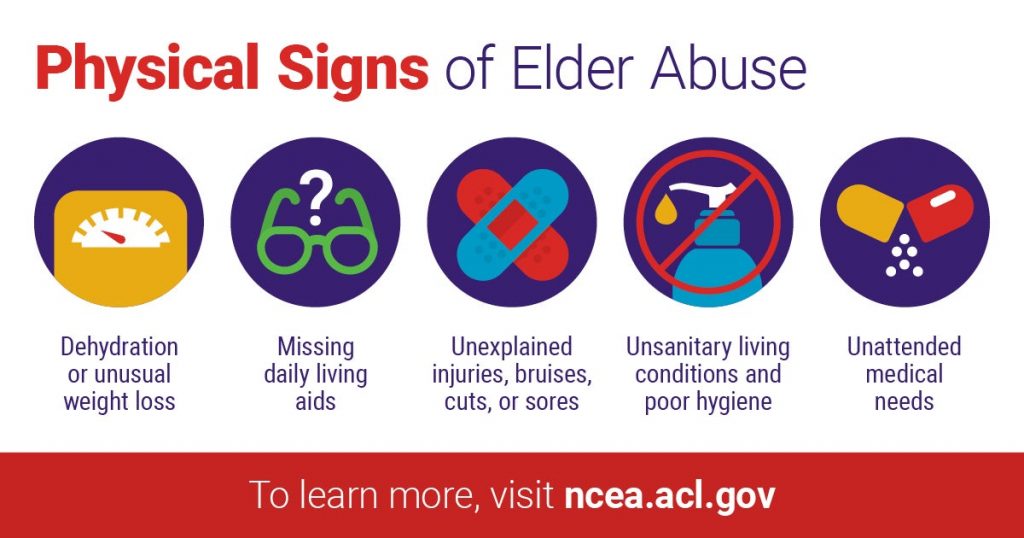 Illustration reference: OpenRN Nursing Mental Health and Community Concepts 2e Ch.15.4.
- Use focused violence-cue checks such as STAMP indicators (staring, tone/volume, anxiety, mumbling, pacing) during escalation-risk triage.
- Assess perceived injustice and strained-relationship contexts because these often precede escalation in family and care settings.
- Assess family/community violence exposure and available social supports to identify intergenerational and environmental risk patterns.
- Assess victim safety risks, support network, and barriers to disclosure.
- Assess potential cultural, linguistic, and social barriers that can suppress abuse disclosure or delay help-seeking.
- Assess setting-level risks (staffing, wait times, environmental overstimulation).
- Assess social-impact trajectory (work instability, family disruption, legal exposure, and stigma/discrimination burden) to guide follow-up supports.
Nursing Interventions
- Use verbal de-escalation with calm tone, validation, and clear boundaries.
- Use de-escalation language that is clear and nonconfrontational, avoids jargon, and sets explicit behavioral limits early.
- During anger episodes, establish immediate safety first, then reassure the client that support is available and invite expression of underlying fear or frustration.
- Implement safety-first protocols and request support early for escalating risk.
- In high-risk encounters, maintain environmental safety tactics (clear exit route, situational awareness, reduced noise/stimulation) and activate rapid help pathways early.
- Document objectively and complete mandated reporting per jurisdictional requirements.
- When abuse is suspected, initiate jurisdiction-specific mandatory reporting pathways promptly (commonly child abuse/neglect and elder/vulnerable-adult abuse; additional reportable categories vary by law and policy).
- In suspected elder abuse, activate local protective-reporting pathways and interdisciplinary support services promptly while maintaining immediate safety.
- Engage clients in personalized trigger and de-escalation plans.
- Set explicit behavioral boundaries (nonviolence, respect for space, acceptable communication) and offer structured choices to reduce powerlessness-driven escalation.
- Integrate stress-reduction and behavior-regulation supports (for example mindfulness, CBT-informed coping, and conflict-resolution skills) to reduce recurrence risk.
- Apply trauma-informed, nonjudgmental care to victims and at-risk individuals.
- Link clients/families to prevention resources (school/community anti-violence programs, mentorship, and psychosocial support services) when chronic violence risk factors are present.
- Use structured staff training and post-incident debriefing to strengthen de-escalation performance and reduce workplace emotional burden.
- Support organization-level zero-tolerance violence policy implementation with easy event-report workflows, trend tracking, and leadership-led prevention training cycles.
Restrictive-First Error
Seclusion or restraint should be last-resort emergency interventions after less restrictive methods fail.
Pharmacology
PRN medication may support acute agitation management when clinically indicated, but should be combined with de-escalation, monitoring, and follow-up reassessment to prevent recurrent escalation.
- Common PRN options include antipsychotics, benzodiazepines, and selected antihistamines based on symptom pattern and safety profile.
- Avoid PRN overreliance because unnecessary sedation, masking of underlying causes, and medication dependence risk can increase.
Clinical Judgment Application
Clinical Scenario
A client in the emergency psychiatric setting becomes verbally threatening, paces aggressively, and reports feeling unfairly treated after prolonged wait time.
- Recognize Cues: Escalation markers and perceived injustice are active triggers.
- Analyze Cues: Risk of progression to physical aggression is rising.
- Prioritize Hypotheses: Priority is immediate safety and rapid de-escalation.
- Generate Solutions: Set behavioral boundaries, reduce stimuli, and offer structured choices.
- Take Action: Implement de-escalation protocol, involve team support, and reassess continuously.
- Evaluate Outcomes: Confirm reduced agitation, restored communication, and updated prevention plan.
Related Concepts
- trauma-informed-care - Guides safe response for clients with trauma-linked escalation.
- client-engagement - Supports collaborative de-escalation and prevention planning.
- emergency-situations-and-rapid-response - Aligns with urgent safety escalation workflows.
- restraints-and-restraint-alternatives - Clarifies restrictive versus nonrestrictive intervention hierarchy.
- communication-process - Provides core skills for verbal de-escalation and trust restoration.