
Autism Spectrum Disorder
Mahahalagang Punto
- Ang ASD ay isang neurodevelopmental condition na may social-communication differences at restricted/repetitive patterns.
- Malawak ang pagkakaiba ng symptom presentation at support needs, kaya kailangan ang individualized care planning.
- Ang maagang screening at diagnosis ay nagbibigay-daan sa mas maagang intervention at mas mabuting developmental outcomes.
- Ang epektibong care ay interdisciplinary, family-centered, at strengths-based sa bahay, paaralan, at komunidad.
- Nangyayari ang ASD sa lahat ng racial/ethnic/economic groups; malaki ang U.S. childhood prevalence (humigit-kumulang 1 sa 36), at karaniwang mas mataas ang diagnosed rates sa males.
Patopisyolohiya
Ipinapakita ng Autism Spectrum Disorder ang neurodevelopmental differences sa social communication, sensory processing, at behavioral regulation. Multifactorial ang etiology at maaaring kabilang ang genetic risk, prenatal/perinatal factors, at developmental brain network variation.
Kabilang sa core features ang differences sa social reciprocity, communication style, at restricted/repetitive behaviors. Maaaring magpataas ng pang-araw-araw na distress ang sensory sensitivity at emotional dysregulation kapag hindi naaayon ang kapaligiran.
Maraming indibidwal na may ASD ang nagpapakita rin ng strengths tulad ng detalyadong long-term memory, malakas na visual/auditory learning, at mataas na performance sa piling domains (halimbawa math, science, music, o art).
Kabilang sa kinikilalang risk patterns ang pagkakaroon ng kapatid na may ASD, mas mataas na edad ng magulang sa kapanganakan, partikular na genetic conditions (halimbawa Down syndrome at Fragile X syndrome), at very low birth weight.
Klasipikasyon
- Social-communication domain: Mga kaibahan sa eye contact, conversational reciprocity, at social cue interpretation.
- Restricted/repetitive domain: Stereotypic motor patterns (halimbawa hand flapping/rocking), compulsive arranging behaviors, resistance to change, restricted interests, at posibleng self-injurious patterns.
- Support levels: Level 1 (some support), Level 2 (substantial support), Level 3 (very substantial support).
- Intervention domains: Behavioral, developmental, educational, social-relational, pharmacologic, psychological, at complementary/alternative supports.
Nursing Assessment
Pokus sa NCLEX
Tukuyin ang functional support needs, sensory triggers, at family capacity sa halip na umasa lamang sa labels.
-
Suriin ang developmental history, communication profile, at social interaction patterns.
-
Palakasin ang routine developmental-milestone screening sa well-child visits at autism-specific screening windows sa humigit-kumulang 18 at 24 na buwan.
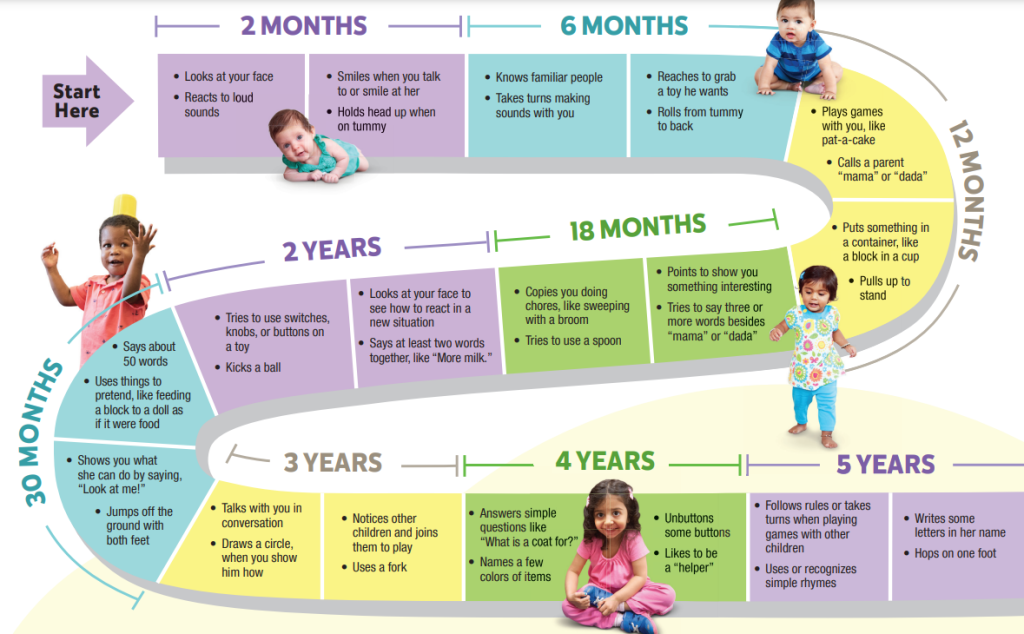 Illustration reference: OpenRN Nursing Health Promotion Ch.7.17.
 -
Suriin ang early social-communication cues (halimbawa response to name, eye contact, at turn-taking) sa developmental history.
-
Kapag may natukoy na developmental delays, suportahan ang formal ASD screening workflows gamit ang caregiver report kasama ang clinical observation tools at i-coordinate ang specialist developmental evaluation.
-
Gumamit ng parent-completed autism tools (halimbawa M-CHAT-R/F) bilang bahagi ng structured early-screen workflows.
-
Suriin ang repetitive behaviors, sensory sensitivities, at emotional regulation triggers.
-
Suriin ang common comorbidities (halimbawa insomnia, ADHD, intellectual disability, anxiety, at depression) at ang functional impact ng mga ito.
-
Suriin ang safety risks, kabilang ang elopement, self-injury, at vulnerability sa abuse.
-
Suriin ang caregiver-identified nonverbal pain at distress cues kapag hindi maaasahang makapag-self-report ang bata.
-
Suriin ang family stressors, insurance/resource barriers, at epekto sa kapatid.
-
Suriin ang kasalukuyang therapies at school supports, kabilang ang IEP o communication devices.
Nursing Interventions
- Suportahan ang maagang referral sa developmental, speech, occupational, at behavioral services.
- Tulungan ang mga pamilya na mag-navigate ng special health-care at educational-needs pathways pagkatapos ng diagnosis (halimbawa chronic-condition management planning at service coordination).
- Makipagtulungan sa mga pamilya upang bumuo ng structured routines at sensory-informed environments.
- Palakasin ang behavior plans na nagpapalinaw ng antecedents at consequences upang mapabuti ang predictable learning at behavior shaping.
- Suportahan ang applied behavior analysis (ABA) plans na nagtataguyod ng desired behaviors, nagpapababa ng harmful/disruptive behaviors, at sumusubaybay ng measurable progress sa paglipas ng panahon.
- Gumamit ng low-stimulation de-escalation strategies (halimbawa dimmed lighting, noise reduction, at calming sensory supports) habang may agitation.
- Gumamit ng malinaw, konkretong komunikasyon at visual supports kapag naaangkop.
- Para sa minimally verbal children, suportahan ang alternative communication pathways (signs, picture systems, at electronic AAC devices).
- Suportahan ang developmental therapies: speech-language, OT (kabilang ang sensory integration), at PT upang palakasin ang komunikasyon at adaptive function.
- I-coordinate ang educational supports sa pamamagitan ng IEP teams (parents/case worker/school staff) gamit ang visual schedules, structured classroom routines, at updated accommodations habang nagbabago ang pangangailangan.
- Palakasin ang TEACCH-style classroom strategies (consistent routines, clear station boundaries, visual-first instruction, at paired verbal-plus-demonstration teaching) upang mapabuti ang learning participation.
- Hikayatin ang social-relational interventions (halimbawa social stories at structured social-skills groups) upang magsanay ng interaction sa predictable settings.
- I-coordinate ang referral para sa adapted CBT kapag nakahahadlang sa daily function ang anxiety, depression, o rigid stress responses.
- Itaguyod ang strengths-based goals sa edukasyon, social engagement, at daily living skills.
- I-coordinate ang interdisciplinary follow-up sa iba’t ibang developmental stages at transitions.
- Habang lumilipat sa adulthood ang adolescents na may ASD, tumulong sa pag-coordinate ng transition supports para sa vocational training, access sa trabaho, pabahay, transportasyon, at partisipasyon sa komunidad.
- Magbigay ng malinaw na vaccine counseling na ang MMR ay hindi sanhi ng autism at tugunan ang misinformation gamit ang evidence-based teaching.
- Asahan ang pagkapagod sa papel ng tagapag-alaga at magturo ng praktikal na stress-management strategies (ehersisyo, healthy nutrition, boundaries, social supports, grounding, mindfulness, breathing, values-based coping).
- I-refer ang mga pamilya sa ASD-focused support organizations at community resources (halimbawa Autism Society, Autism Speaks, at state-based parent information/resource centers).
Pinsala ng One-Size-Fits-All
Ang standardized approaches na walang individual adaptation ay maaaring magpataas ng distress at magpababa ng participation.
Pharmacology
Walang medication na nakagagamot ng ASD. Symptom-targeted ang pharmacologic care para sa mga kaugnay na concern tulad ng high activity, inattention, irritability/aggression, self-injurious behavior, sleep disturbance, anxiety/depression, o seizure comorbidity sa pakikipagtulungan sa prescribers.
Mino-monitor ng mga nars ang efficacy, adverse effects, at function habang pinapalakas ang behavioral at developmental interventions bilang core treatment.
May ilang pamilya na gumagamit ng complementary approaches (halimbawa special diets, herbal products, animal-assisted activities, art therapy, mindfulness, o relaxation). Dapat suriin ng mga nars ang safety, interaction risk, at goal alignment habang pinapalakas na ang adjunctive approaches ay hindi pamalit sa core evidence-based supports.
Clinical Judgment Application
Clinical Scenario
Isang preschool child ang may delayed social reciprocity, madalas na hand-flapping, matinding distress kapag may pagbabago sa routine, at limitadong expressive language.
- Recognize Cues: Multi-domain ASD features na may sensory-triggered dysregulation.
- Analyze Cues: Sinusuportahan ng pattern ang ASD na may substantial support needs.
- Prioritize Hypotheses: Prayoridad ang communication support, safety, at family coaching.
- Generate Solutions: Bumuo ng interdisciplinary plan na may school at therapy integration.
- Take Action: Ipatupad ang visual routine supports at caregiver education.
- Evaluate Outcomes: Nabawasang dysregulation at mas mahusay na daily participation.
Mga Kaugnay na Konsepto
- mga communication disorder - Madalas na magkapatong ang language/pragmatic challenges.
- mga intellectual disability - Maaaring kasabay at makaapekto sa adaptive planning.
- attention-deficit hyperactivity disorder - Karaniwan ang magkakaparehong concern sa attention at regulation.
- mga anxiety-related disorder - Maaaring magpataas ang anxiety ng rigidity at sensory distress.
- mga sistema ng suporta ng pamilya - Sentrál ang family adaptation sa pangmatagalang outcomes.