
Positioning Supine to Lateral (Side-Lying)
Key Points
- Lift-sheet repositioning reduces friction and shear during turning.
- Side-rail sequencing and count-based turns improve resident safety.
- Proper pillow placement prevents bony pressure and maintains alignment.
- Lateral positioning helps offload coccyx pressure and protects the dependent arm when alignment checks are completed.
Equipment
- Lift sheet (draw sheet)
- Four pillows
- Hand hygiene supplies
Procedure Steps
- Perform routine pre-procedure actions: knock, identify resident, explain procedure, provide privacy, and perform hand hygiene.
- Flatten bed and raise to safe working height.
- Raise side rail on destination side of turn, then work from opposite side.
- Explain that resident will be moved toward working side before turn.
- Using lift sheet and count of three, move resident toward working side.
- Prepare resident for turn: position upper arm and flex near knee as tolerated.
- Explain turn toward raised rail and complete count-based turn using lift sheet.
- Ensure face remains clear of rail/pillow and check resident is not lying on bottom arm.
- Place pillow behind back to maintain lateral position and keep top leg flexed over bottom leg as tolerated.
- Confirm resident is centered in bed and aligned from foot-of-bed view.
- Place support pillows between upper arm and rib cage and between knees/ankles; adjust head pillow for comfort and pressure relief.
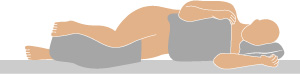 Illustration reference: OpenStax Clinical Nursing Skills Ch.9.
 - Complete post-procedure safety steps: bed low/locked, call light in reach, hand hygiene, and documentation of repositioning/skin findings.
Common Errors
- Turning without lift-sheet support → higher friction/shear skin injury risk.
- Inadequate side-rail setup before turn → increased fall hazard.
- Missing elbow/knee pressure supports → increased bony-prominence injury risk.
- Failing to check alignment after turn → prolonged discomfort and malpositioning risk.
Related
- moving-and-positioning-clients - Positioning goals and pressure-relief principles guide this procedure.
- making-an-occupied-bed - Turning workflow often overlaps with in-bed care and linen changes.