
Donning and Doffing PPE With Mask and Eye Protection
Key Points
- Correct PPE order lowers contamination risk during high-exposure care.
- Gloves are removed before gown, and hand hygiene is required between key removal steps.
- Doffing is completed before leaving room to contain contamination.
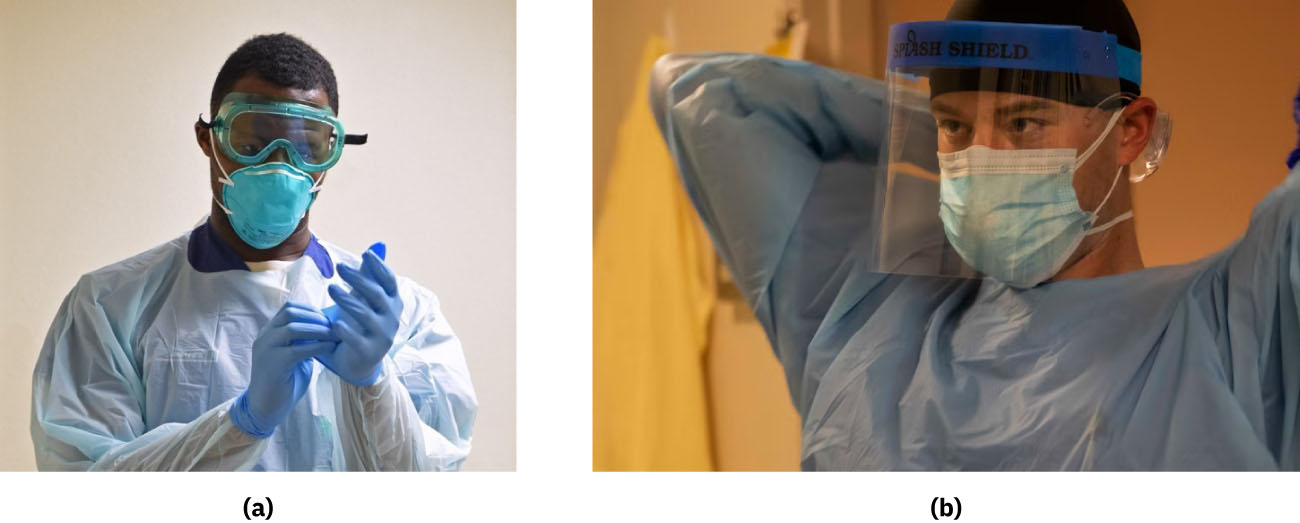 Illustration reference: OpenStax Fundamentals of Nursing Ch.10.2.
Equipment
- Isolation gown
- Mask
- Face shield or goggles
- Gloves
- Alcohol-based hand sanitizer or handwashing access
Procedure Steps
- Verify ordered precaution type, then gather all required PPE before entering care sequence.
- Don gown first: orient to back opening, unfold, insert arms, secure neck then waist, and ensure full clothing coverage.
- Don mask and then eye protection (face shield or goggles).
- If using an N95 respirator, position straps correctly and perform a user-seal check at each donning.
- Don gloves last and overlap glove cuffs over gown sleeves.
- Complete resident care while maintaining PPE integrity.
- Remove gloves first using glove-to-glove, then skin-to-skin technique; if gown ties are in front, untie them before final glove removal.
- Remove gown by unfastening ties and pulling away from shoulders while turning contaminated side inward; discard or place reusable gown per policy.
- Exit the patient room when policy indicates room-exit doffing for face/respiratory protection.
- Perform hand hygiene.
- Remove eye protection by the strap/arms without touching the front and place in correct reusable/disposal receptacle per policy.
- Remove mask or respirator by ties/straps from behind head without touching the front; do not wear under chin or store in pockets between patients.
- Perform final hand hygiene.
Common Errors
- Removing gown before gloves → increases hand/clothing contamination risk.
- Touching front of mask or shield during removal → transfers pathogens to face/hands.
- Skipping hand hygiene between doffing steps → amplifies cross-contamination.
- Exiting room before safe doffing sequence → spreads contamination beyond isolation zone.
Related
- personal-protective-equipment - PPE selection and rationale by exposure level.
- transmission-based-precautions - PPE sequence supports contact, droplet, and airborne precautions.