
Models of Health and Illness sa Nursing Practice
Mahahalagang Punto
- Hinuhubog ng health models kung paano nagsusuri ng needs ang nurses, nakikipagkomunika ng risk, at nagdidisenyo ng interventions.
- Nakatuon ang biomedical models sa disease processes, habang isinasama ng holistic at wellness models ang psychosocial at contextual factors.
- Gumagabay sa prevention counseling ang behavior models tulad ng Health Belief Model at Health Promotion Model.
- Kabilang sa high-yield behavior-change theories sa nursing ang Social Cognitive Theory, Theory of Planned Behavior, Health Belief Model, Transtheoretical Model, at Pender’s Health Promotion Model.
- Maaaring gumamit din ang community-level behavior-change planning ng diffusion of innovations theory upang mapahusay ang adoption ng bagong health practices.
- Nakakatulong ang need-based models, kabilang ang Maslow, sa ligtas na pag-prioritize ng interventions.
- Pinalalawak ng medical-view models ang lampas sa disease treatment upang isama ang spiritual meaning, person-centered growth, at connectedness.
- Magkaugnay ngunit magkaiba ang health at wellness: inilalarawan ng health ang multidomain status, habang binibigyang-diin ng wellness ang active lifestyle choices tungo sa balance.
Pisyopatolohiya
Ang health models ay conceptual frameworks at hindi biologic pathways. Inaayos nila ang decision-making sa pagtukoy kung ano ang “health,” ano ang nagtutulak ng behavior change, at paano ini-interpret ang risk.
Nakaaapekto ang model selection sa care outcomes: maaaring makaligtaan ng makitid na disease-only framing ang social at behavioral drivers, habang maaaring mapahusay ng malawak na holistic framing ang long-term adherence at prevention.
Klasipikasyon
- Biomedical model: Disease-centered diagnosis at treatment emphasis.
- WHO health framing: Health bilang kumpletong physical, mental, at social well-being, hindi lamang kawalan ng sakit.
- Holistic/wellness model: Integrated physical, mental, emotional, intellectual, social, spiritual, cultural, at environmental dimensions.
- Holistic Health Model emphasis: Balanse sa physical, emotional, social, at spiritual domains na may prevention na nakatuon sa root causes (halimbawa nutrition, exercise, stress, at environmental exposures).
- Health-status framing: Interconnected physical, emotional, social, intellectual, at spiritual status domains.
- Wellness-action framing: Active pursuit sa physical, emotional, social, occupational, spiritual, intellectual, environmental, at financial dimensions.
- Dunn high-level wellness model: Ongoing growth process gamit ang being, belonging, becoming, at befitting domains.
- Behavioral models: Health Belief Model at Health Promotion Model para sa risk perception at behavior change.
- Cognitive-behavioral common-concepts domain: Namamagitan ang cognition sa behavior, hindi sapat ang knowledge lang para sa change, at sama-samang hinuhubog ng perception-motivation-skill-social context ang outcomes.
- Social Cognitive Theory (SCT): Nagpapakita ang behavior ng dynamic interaction sa personal factors, environment, at prior behavior; malakas na predictor ng planned behavior uptake ang self-efficacy.
- SCT applied-construct domain: Reciprocal determinism, behavioral capacity, expectations, self-efficacy, observational learning, at reinforcement ang gumagabay sa intervention design.
- Theory of Planned Behavior (TPB): Naiimpluwensiyahan ang behavior intention ng attitude, subjective norms, at perceived behavioral control; hinuhubog ng feasibility at access ang follow-through.
- Health Belief Model (HBM) constructs: Perceived susceptibility, perceived severity, perceived benefits, perceived barriers, cues to action, at self-efficacy.
- HBM strategy-matching domain: Itinutugma sa bawat construct ang risk personalization, consequence framing, barrier reduction, readiness cues, at confidence-building actions.
- Transtheoretical Model (TTM): Precontemplation, contemplation, preparation, action, maintenance, at termination na may posibleng nonlinear relapse movement.
- Diffusion-of-innovations domain: Nakasalalay ang community adoption ng bagong health practices sa innovation features, communication channels, social-system dynamics, at adoption time course.
- Diffusion-attribute domain: Relative advantage, compatibility, complexity, trialability, at observability ang nakaaapekto sa uptake speed at scale.
- Diffusion-adopter domain: Innovators, early adopters, early majority, late majority, at laggards ay nangangailangan ng tailored engagement strategies.
- Pender Health Promotion Model (HPM) belief set: Perceived benefits, perceived barriers, self-efficacy, activity-related affect, interpersonal influences, situational influences, commitment to action, at immediate competing demands/preferences.
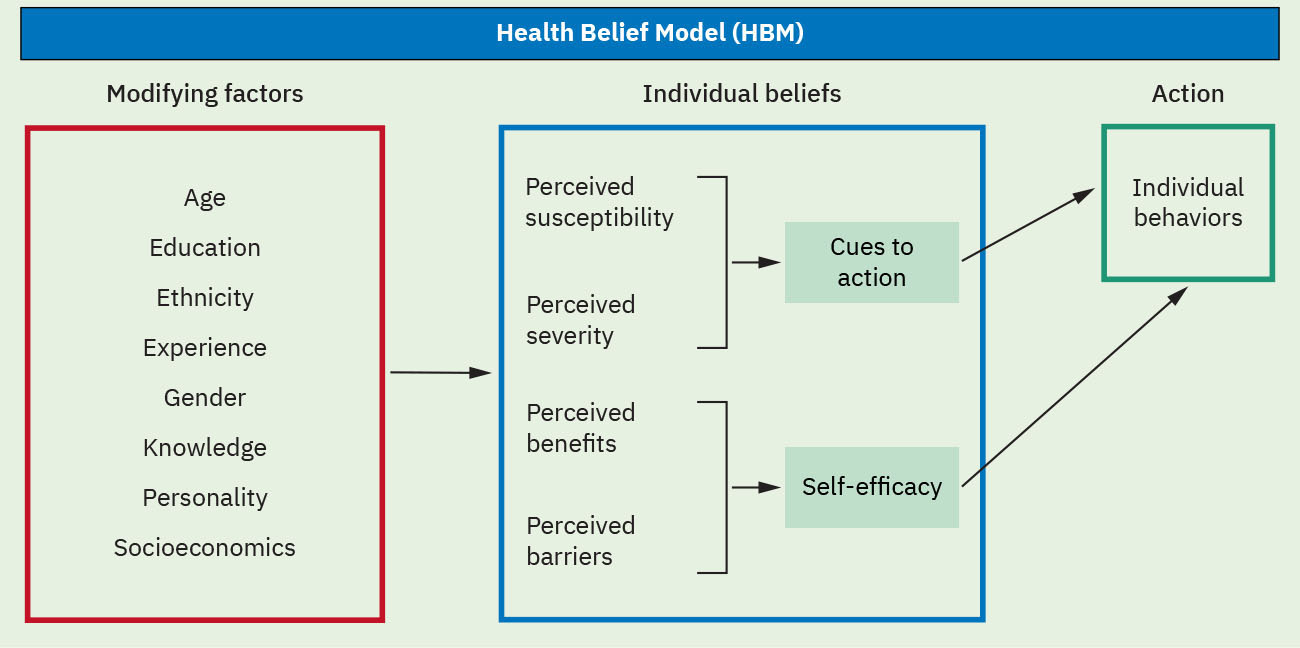 Illustration reference: OpenStax Fundamentals of Nursing Ch.4.2.
- Health Promotion Model (HPM) structure: Individual characteristics and experiences, behavior-specific cognitions and affect, at behavioral outcomes.
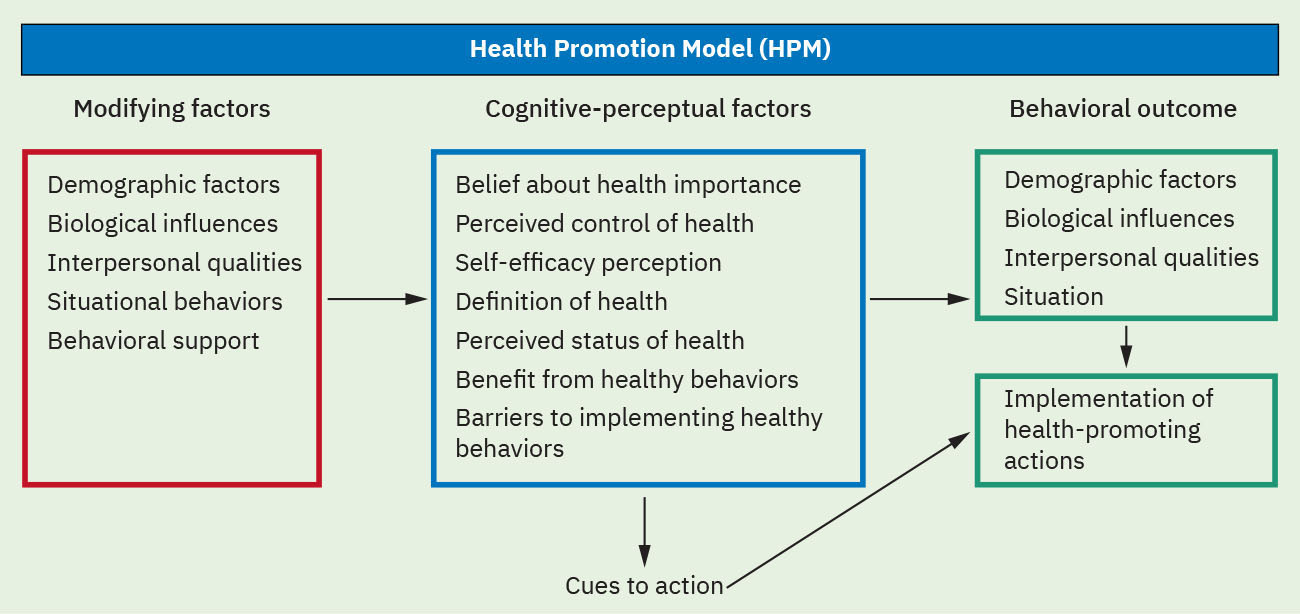 Illustration reference: OpenStax Fundamentals of Nursing Ch.4.2.
- Need-priority model: Maslow hierarchy para sa sequencing ng care priorities.
- Medical-view models: Religious, humanistic, at transpersonal perspectives sa healing at meaning.
- Health-illness continuum models: Biomedical, psychosomatic, at existential frameworks na nagkakaiba sa pagbigay-bigat sa body, mind, at purpose.
Medical-View Model Distinctions
- General medical model: Inilalarawan ang health bilang kawalan ng sakit, binibigyang-diin ang diagnosis/treatment (halimbawa medication at procedures), at gumagamit din ng prevention strategies tulad ng vaccines, screening, at lifestyle modification.
- Religious model: Inilalarawan ang health bilang physical, mental, at spiritual well-being na sinusuportahan ng relasyon sa higher power, faith practices, at community meaning systems.
- Humanistic model: Inuuna ang person-centered care, unique values, self-awareness, personal growth, at collaborative communication batay sa empathy at mutual respect.
- Transpersonal model: Binibigyang-diin ang development lampas sa ego boundaries, spiritual o mystical experience, at interconnectedness sa mas malawak na kabuuan.
Health-Illness Model Contrasts
- Biomedical: Body-as-system framing; pinakamalakas para sa acute disease mechanisms ngunit maaaring ma-underweight ang psychosocial context.
- Psychosomatic: Maaaring magpakita bilang physical symptoms ang psychological distress, na nagpapatibay sa mind-body interaction.
- Existential: Nakatuon sa meaning, authenticity, responsibility, at kung paano tumutugon ang mga indibidwal sa uncertainty, suffering, at mortality.
Pagsusuri sa Pag-aalaga
Pokus sa NCLEX
Itugma ang model choice sa clinical problem: acute physiologic instability kumpara sa long-term behavior change.
- Suriin kung ang kasalukuyang plan ay sobrang nakatuon sa disease treatment at kulang sa behavior/context.
- Suriin kung ang pasyente ay itinutumbas ang health sa physical symptoms lamang habang napapabayaan ang emotional, social, o lifestyle domains.
- Suriin ang patient beliefs tungkol sa susceptibility, severity, benefits, at barriers.
- Suriin ang intention drivers at TPB elements (attitude, subjective norms, at perceived behavioral control).
- Suriin ang readiness para sa health-promoting behavior change.
- Suriin ang stage of change (kabilang ang relapse movement) bago pumili ng intervention intensity.
- Suriin ang unmet basic needs na humahadlang sa higher-level engagement.
- Suriin ang model fit sa acute, chronic, at preventive care contexts.
- Suriin kung ang distress patterns ay nagpapahiwatig ng psychosomatic contributors o existential meaning conflict.
- Suriin ang spiritual beliefs at community support kapag gumagamit ang patients ng religious o transpersonal healing frames.
Mga Interbensyon sa Pag-aalaga
- Gumamit ng biomedical framing para sa urgent physiologic stabilization needs.
- Isama ang holistic assessment sa chronic at recovery planning.
- Tugunan ang root causes ng imbalance at i-coach ang informed daily choices na sumusuporta sa whole-person well-being.
- Gumamit ng Dunn-aligned coaching: palakasin ang self-awareness (being), connectedness (belonging), growth goals (becoming), at preventive self-care choices (befitting).
- Ilapat ang belief- at motivation-based counseling para sa prevention goals.
- Gumamit ng SCT-informed coaching upang buuin ang self-efficacy sa pamamagitan ng small wins, modeling, at supportive feedback.
- Gumamit ng TPB-informed counseling upang sabay na tugunan ang attitude, norms, at practical control barriers.
- Gumamit ng staged at realistic health-promotion goals na nakaayon sa readiness.
- Gamitin ang HBM constructs upang matukoy kung low perceived threat, high barriers, o weak cues to action ang naglilimita sa uptake.
- Gamitin ang HPM belief mapping upang i-individualize ang nursing counseling at bawasan ang immediate competing-demand failure.
- Gumamit ng SCT construct-matched coaching: skills training, small-step goals, modeling, at reinforcement upang mapahusay ang sustained behavior change.
- Gumamit ng diffusion-of-innovations planning para sa community programs sa pagpapasimple ng complexity, pagpapahusay ng trialability, at pagtutok sa early adopters upang pabilisin ang spread.
- Bumuo ng plans na nagpapahusay ng patient empowerment at access sa supportive environments.
- Ipares ang prevention counseling sa ongoing education at skill-building para sa sustained behavior change.
- Isama ang patient values kapag kabilang sa goals ang spiritual practices, nontraditional therapies, o meaning-centered care preferences.
- Muling suriin at ilipat ang model emphasis habang nagbabago ang patient context.
Model Rigidity Risk
Ang rigid na paglalapat ng isang model sa lahat ng sitwasyon ay maaaring magdulot ng incomplete plans at mas mahinang outcomes.
Parmakolohiya
Humuhusay ang medication plans kapag pinagsasama ang biomedical prescribing at behavior-focused adherence support at contextual barrier assessment.
Paglalapat ng Klinikal na Paghuhusga
Klinikal na Sitwasyon
Ang pasyenteng may hypertension ay paulit-ulit na lumiliban sa follow-up at tumatanggi sa lifestyle changes kahit nauunawaan ang diagnosis details.
- Recognize Cues: May biomedical understanding, ngunit limitado ang behavior change.
- Analyze Cues: Malamang na hindi natutugunan ang belief, motivation, o barrier factors.
- Prioritize Hypotheses: Kailangan ang health-belief at promotion models bukod sa disease model.
- Generate Solutions: I-elicita ang perceived barriers, magtakda ng small goals, at iayon ang supports.
- Take Action: Ipatupad ang mixed-model care plan na may follow-up coaching.
- Evaluate Outcomes: Humuhusay ang adherence at risk-factor control.
Mga Kaugnay na Konsepto
- hierarchy of needs ni Maslow - Need-priority framework para sa safe sequencing.
- humanistic theories at therapies - Person-centered growth, empathy, at self-awareness framing.
- Healthy People 2030, health equity, at social determinants - Population-level prevention orientation.
- evidence-based decision-making sa nursing - Model-informed decision integration kasama ang ebidensiya.
Sariling Pagsusuri
- Kailan kinakailangan ang biomedical model pero hindi sapat?
- Paano nagkakaiba sa practical use ang Health Belief at Health Promotion models?
- Bakit dapat umunlad ang model selection sa pagtakbo ng care?