
Postural Drainage and Chest Physiotherapy
Key Points
- Postural drainage uses gravity to move secretions from targeted lung segments toward central airways.
- Percussion and vibration are added to loosen mucus and improve mobilization.
- Drainage positions are generally held for about 3-15 minutes, then adjusted for tolerance.
Equipment
- Positioning aids for segment-specific drainage (pillows, bed adjustment)
- Manual cupping technique or approved mechanical percussion device
- Monitoring equipment for tolerance and oxygenation
- Suction setup or cough-support supplies for secretion removal
Procedure Steps
- Assess patient indication for airway clearance and review contraindications.
- Auscultate lungs and identify segments with added sounds/retained secretions.
- Select drainage position that places target segment superior to the carina.
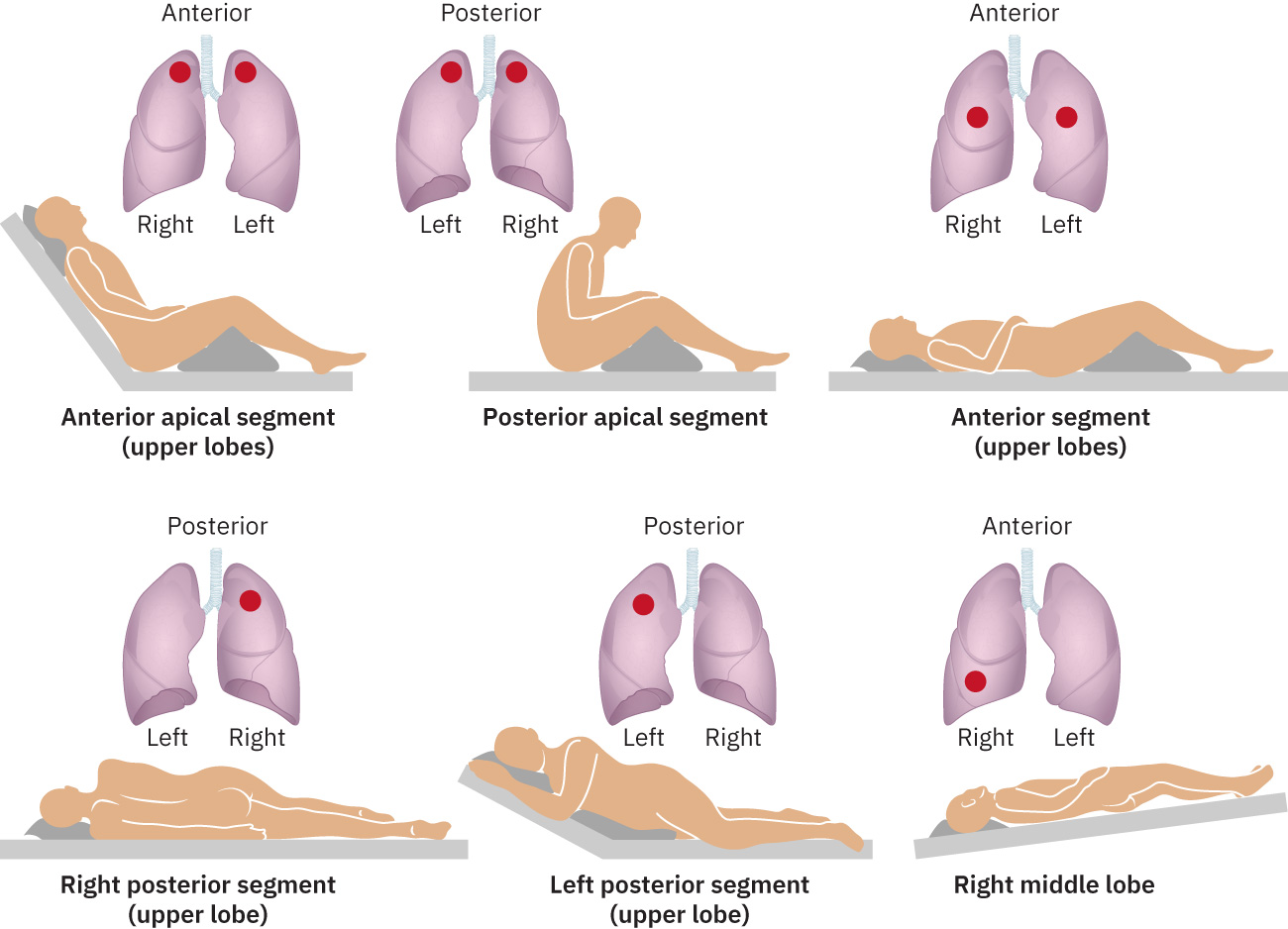 Illustration reference: OpenStax Clinical Nursing Skills Ch.18.4.
- Position patient and maintain for approximately 3-15 minutes as tolerated.
- Apply rhythmic percussion (cupping) over draining segment to transmit kinetic energy.
- Apply vibration during expiration over the same area to loosen/dislodge secretions.
- Encourage cough or facilitate suction to remove mobilized secretions.
- Modify position and intensity based on tolerance, hemodynamics, and response.
- Reassess breath sounds, secretion output, and respiratory effort after each cycle.
- Document position used, duration, tolerance, and airway-clearance outcomes.
Common Errors
- Starting drainage without segment-focused assessment → poor clearance effectiveness.
- Inadequate position hold time → reduced gravity-assisted mucus movement.
- Excessive percussion force → discomfort and low treatment adherence.
- Skipping post-treatment reassessment → missed evidence of response or intolerance.
Related
- bronchial-hygiene-techniques - Concept-level overview of airway-clearance method selection.
- airway-suctioning - Mobilized secretions may require suction when cough is ineffective.