
N95 Respirator Use and Fit Check
Key Points
- N95 respirators are used for airborne-risk care and require a snug seal to be effective.
- The mask must be placed correctly over nose and mouth, secured at head and neck, and fit checked before room entry.
- A wet mask loses protective integrity and must be replaced promptly.
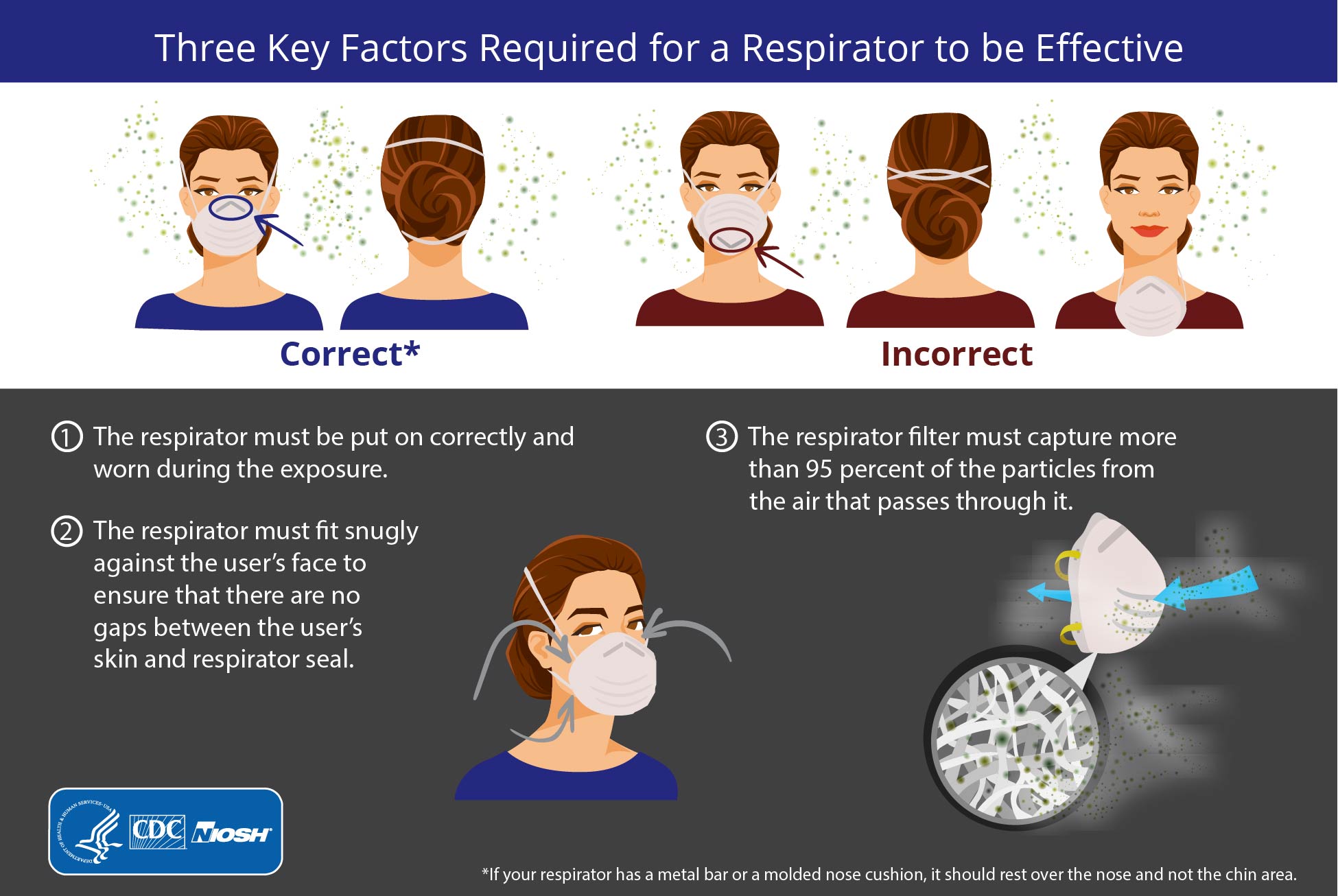 Illustration reference: OpenStax Fundamentals of Nursing Ch.10.2.
Equipment
- Correctly sized N95 respirator available at point of care
- Mirror or buddy check process when local policy requires fit verification support
- Hand hygiene resources before and after PPE handling
- Waste receptacle for used respirator disposal per facility protocol
Procedure Steps
- Confirm airborne-risk indication and verify N95 supply availability before patient-room entry.
- Perform hand hygiene before touching PPE.
- Position respirator over nose and mouth with lower edge below the chin.
- Secure straps so the upper and lower bands sit at the middle of the head and neck as directed.
- Mold nose area and adjust edges to minimize gaps.
- Perform a fit check to confirm a tight facial seal before entering the care area.
- Reassess fit after movement or prolonged wear and before re-entry.
- Replace the respirator if it becomes wet from exhaled moisture or if seal integrity is compromised.
- Doff respirator according to policy and perform hand hygiene immediately after removal.
Common Errors
- Entering airborne-precaution area without fit check → inadequate protection from small airborne particles.
- Wearing loose strap positioning → face-seal failure and leakage risk.
- Continuing use of wet respirator → reduced barrier effectiveness.
- Skipping hand hygiene around respirator handling → avoidable contamination pathway.
Related
- airborne-precaution-supply-readiness - Pre-entry supply checks prevent unsafe room entry.
- ppe-selection-by-exposure-risk - Respirator choice depends on precaution type and anticipated exposure.